
Art Is Not Just a Hobby
When parents think about enrichment activities, music and sports usually come first. Art often gets treated as a nice-to-have -- something fun but not essential.
That's a mistake. Art education develops cognitive, emotional, and motor skills that are difficult to build any other way. The child who learns to observe carefully, plan a composition, and solve visual problems is developing the same mental muscles they'll use in science, engineering, and everyday decision-making.
The best part? Kids don't realise they're learning any of this. They just think they're drawing.
Fine Motor Skills and Hand-Eye Coordination
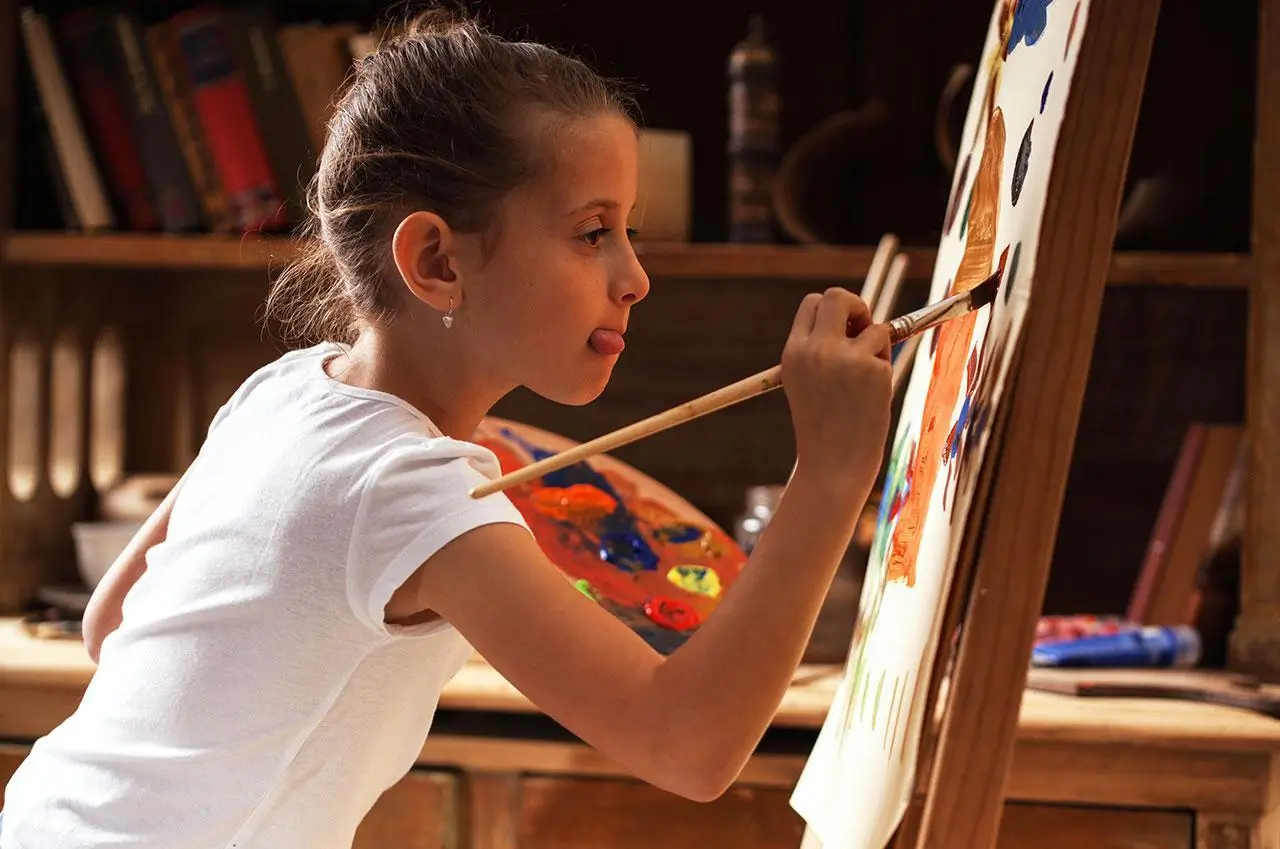
Holding a pencil, controlling a paintbrush, cutting along a curved line -- these require precise coordination between hands and eyes. For young children, art is one of the most effective ways to develop the fine motor control they need for writing.
A child who struggles with handwriting at school will often improve significantly after a few months of regular art classes. The movements are similar, but art removes the pressure of "getting it right" that writing carries.
For older children, techniques like shading, cross-hatching, and detailed painting develop even finer control. These skills transfer directly to activities that require precision and patience.
Problem-Solving and Decision-Making
Every piece of art is a series of decisions. What colour? What size? Where on the page? How to fix a mistake?
Unlike maths, where there's usually one correct answer, art teaches children that problems can have multiple valid solutions. A tree doesn't have to be green. A face doesn't have to be realistic. This flexibility in thinking -- what educators call divergent thinking -- is consistently linked to higher creativity and better problem-solving across all subjects.
Children also learn to evaluate their own work. "Does this look right? What could I change?" This kind of self-assessment is a skill that many children don't develop until much later.
Focus and Patience in a Distracted World
Try getting a seven-year-old to sit still and concentrate for 45 minutes. It's hard. Unless they're drawing something they care about.
Art naturally demands sustained attention. A child working on a detailed drawing enters a state of flow -- fully absorbed in the task, unaware of time passing. This is the same deep focus that schools struggle to cultivate during academic lessons.
Over time, regular art practice extends a child's ability to concentrate. Parents consistently tell us that their child's attention span improves in other areas after starting art classes.
Confidence That Comes from Creating
There's a particular kind of confidence that comes from making something with your own hands. It's different from academic confidence or sporting achievement. It's the quiet pride of looking at something you created and thinking: "I made that."
At Melody Makers, we display student artwork in regular in-house exhibitions. Watching a child's face when their family sees their painting on a wall -- that moment is worth more than any grade.
This confidence is especially important for children who don't naturally excel in academic or athletic settings. Art gives them a space where they can succeed on their own terms.
Language and Vocabulary Development
Art class is surprisingly language-rich. Children learn words like texture, proportion, perspective, foreground, contrast, composition. They describe their work, explain their choices, and discuss what they see in others' artwork.
For children in Dubai's multilingual environment, this kind of structured vocabulary building is valuable. They're learning descriptive language in a context that makes it memorable and meaningful.
Younger children also develop spatial language through art -- concepts like "above," "beside," "overlapping," "in front of." These are the same spatial concepts that underpin early mathematical understanding.
What to Look for in an Art Class
Not all art classes are equal. The best programmes offer structured progression -- not just free drawing every week. Your child should be learning specific techniques appropriate to their age, with new challenges introduced as they develop.
Look for small class sizes or individual instruction. Art requires personal feedback that a teacher can't give in a room of 20 children.
Ask about the range of materials and techniques covered. A good programme exposes children to pencil, charcoal, pastels, watercolours, acrylics, and mixed media -- not just one medium.
At Melody Makers, our art programme is led by Madhusudhan P.K., a professional artist with decades of teaching experience. Classes cover everything from basic sketching for beginners to oil painting for advanced students, in a relaxed, non-competitive environment.
Art Classes at Melody Makers Dubai
We offer group and individual art classes for children from age 4 through to adults, both in-studio at our Karama location and online.
The programme covers pencil drawing, charcoal, oil pastels, Indian ink work, watercolours, acrylics, patchwork, wash techniques, still life, and portraiture. Students progress at their own pace.
Student artwork is regularly exhibited at our in-house exhibitions and community events. It's not just about learning technique -- it's about building pride in what they create.