
Where Students Study for Life
Children start at 4 and stay through university. Adults pick up their first instrument at 60. Some families are now in their second generation with us.
Est. 1997
Dubai’s Longest-Running
4 to 75
Age Range of Students
Trinity
Registered Exam Centre
172+
Combined Team Years
The Most Important Hours of Your Child's Week
Research from Harvard, Stanford and Northwestern confirms what parents instinctively know: what children do after school shapes who they become. Music training physically rewires the brain. Dance builds discipline and body awareness. Creative arts develop the problem-solving skills that show up in every exam, every job interview, every career.
But here's what the research also shows: these benefits compound over time. Two years of lessons help. Five years change the brain. Ten years build permanent cognitive advantages. The children who benefit most are the ones who never want to stop.
That's where Melody Makers is different. A child walks in at age 5 for a piano lesson and is still here at 15 - not because their parents make them, but because their teacher knows them by name, knows their favourite songs, knows when they're having a bad day and need a different kind of lesson. Students commonly stay for well over 10 years, some reaching 15 - and one stayed for 18 years, learning piano, guitar, drums and art before landing a cybersecurity career at one of the Middle East's largest banks.
Many of our current students are the children of former students. Second-generation families who trust us because they lived it themselves. We also have adults who picked up their first instrument at 60 - and a 75-year-old who proves it's never too late. That kind of community isn't built by advertising. It's built one lesson, one concert, one conversation at a time, over 29 years.
The Numbers That Actually Matter
Most schools measure success by enrolment. We measure it by how long students choose to stay.
10-18 yrs
Students routinely stay for over a decade. Our longest-tenured student spent 18 years with us - from first piano lesson to a career in cybersecurity.
16+ yrs
Our longest-serving instructor, Madhusudhan, has been teaching here for over 16 years. When your teacher stays, so does the trust.
2nd Gen
We now teach the children of our former students. Families who return a generation later are the ultimate proof that what we do works.
See for yourself - your first lesson is free
No payment, no commitment. Meet your teacher. See the studio. Sit in the waiting area and watch how families interact here. You'll know within minutes whether this is the right fit.
Stories That Keep Repeating
18 Years at Melody Makers
Kashmira Dharmesh Jagada has been part of the Melody Makers team for 18 years. But this isn't a story about Kashmira. It's about her daughter.
She grew up inside these walls. Learned piano, guitar, drums and art - not as a casual hobby, but as a sustained creative education spanning nearly two decades. Thousands of hours of practice, performance and problem-solving. Years of reading musical scores, recognising patterns, training her brain to process complex information in real time.
Today, she works in cybersecurity at First Abu Dhabi Bank (FAB) - one of the largest financial institutions in the Middle East. And if you think music and cybersecurity have nothing in common, the research says otherwise.
15+ Years at Melody Makers
Rekha Jagannath Kunder has been with Melody Makers for 19 years. Her two children grew up here too - both studying multiple subjects over 15 years, moving between music, dance and art as their curiosity led them.
Today, one works in private equity. The other in biotechnology. Two very different careers. The same foundation: years of creative discipline, pattern recognition, stage confidence and the kind of deep perseverance that only comes from sustained practice.
These aren't one-off stories. We see this pattern repeat across our long-term students: years of creative training compound into cognitive advantages that show up in unexpected places - cybersecurity, private equity, biotechnology, engineering, medicine. The child who spends a decade learning to read a musical score is training the same pattern-recognition skills that drive success in data analysis, coding and strategic thinking.
The question isn't whether arts education helps your child's future. The science is clear on that. The question is how long they stay - because the benefits compound with every year.
What the Science Says
This isn't anecdotal. Decades of neuroscience research from Harvard, Stanford, Northwestern and USC confirm what we've seen in our students for nearly 30 years.
Music Physically Rewires the Brain
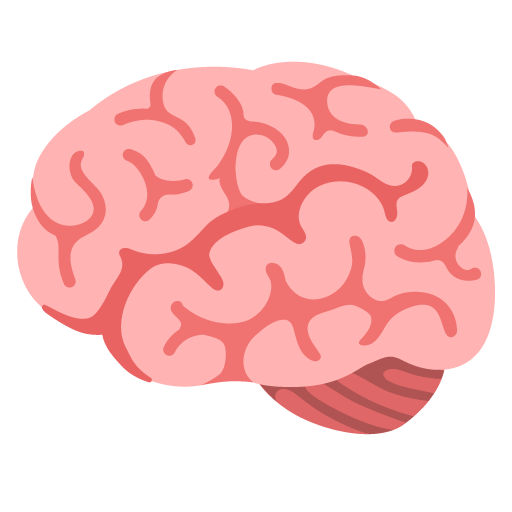 Music Physically Rewires the Brain
Harvard Medical School
The Corpus Callosum Effect
Dr. Gottfried Schlaug's landmark research found that children who begin music training before age 7 develop a measurably larger corpus callosum - the bridge connecting the brain's two hemispheres. This structural change enhances the brain's ability to process information across both sides simultaneously, improving coordination, memory and problem-solving.
Northwestern University
Sub-Millisecond Precision
Professor Nina Kraus at the Brainvolts Lab demonstrated that musicians' brains encode speech with sub-millisecond precision far exceeding non-musicians. Music training literally rewires the auditory system, improving speech processing, reading ability, and the capacity to learn new languages.
USC Brain & Creativity Institute
Training Causes the Change
Dr. Assal Habibi's longitudinal study tracked children over several years and confirmed that music training causes structural brain changes - it's not that smarter children choose music. The training itself reshapes the brain at both microscopic and macroscopic levels.
NIH ABCD Study (11,875 adolescents)
The Socioeconomic Equaliser
A striking finding: among non-musicians, children from disadvantaged backgrounds showed smaller vocabulary gains than wealthier peers. But children who played music showed the same rate of improvement regardless of background. Music training appeared to buffer against socioeconomic disadvantage.
Why Duration Matters: 2 Years vs. 10 Years
 Why Duration Matters: 2 Years vs. 10 Years
This is the part most music schools don't talk about - because most students don't stay long enough for it to matter. But at Melody Makers, where students routinely stay for 10-15 years, the compounding effects are profound.
2 years
Research shows measurable cognitive gains begin after 2+ years of consistent training - improved vocabulary, pitch discrimination, and auditory processing.
5-7 years
Structural brain changes become significant. Enhanced executive function, better working memory, stronger reading comprehension and improved performance in maths and spatial reasoning.
10+ years
The compounding reaches its peak. Neural pathways are deeply established. The discipline, pattern recognition, emotional regulation and creative problem-solving become permanent cognitive traits that transfer to every domain.
Based on longitudinal research by Schlaug (Harvard), Habibi (USC), Kraus (Northwestern), and the NIH ABCD study.
From Practice Room to Boardroom
 From Practice Room to Boardroom
The connection between arts education and career success isn't a feel-good theory. It's data.
2.85x
Nobel Laureates & the Arts
A Michigan State University study of 773 Nobel laureates found they were 2.85 times more likely than average scientists to have an arts or music hobby, and roughly 9 times more likely to have training in crafts or fine arts. The arts don't distract from scientific achievement - they fuel it.
Root-Bernstein et al., published in PNAS

Music & Cybersecurity
Cybersecurity teams have reported a disproportionate number of members with music backgrounds. The connection is pattern recognition: reading a musical score is an exercise in identifying and applying abstract patterns - the same skill security analysts use to detect anomalies and threats in data.
Reported by Fast Company and VIAVI Solutions

Executive Function & Leadership
Music training strengthens the prefrontal cortex - the brain region responsible for planning, decision-making and impulse control. These are the exact cognitive skills that distinguish strong leaders, effective managers and successful entrepreneurs.

Stage Performance & Communication
Research published in the Journal of Management Education found that performing arts training significantly raises body awareness, increases self-confidence, and produces more effective communicators. The student who performs on stage at 8 becomes the adult who commands a boardroom at 28.
Where Creativity Leads
The skills built through years of creative practice don't stay in the practice room. They show up everywhere.

Technology & Engineering
Pattern recognition from reading scores transfers directly to code, data analysis and systems thinking. Musicians are overrepresented in software engineering and cybersecurity teams.

Medicine & Science
The discipline of sustained practice, attention to fine detail, and the ability to process complex information under pressure make arts-trained students exceptional in clinical and research settings.

Finance & Business
Executive function, strategic thinking and the ability to read patterns in data. The skills that make a strong musician overlap remarkably with the skills that make a strong analyst or portfolio manager.

Entrepreneurship
Creative problem-solving, comfort with ambiguity, resilience from performing under pressure, and the discipline to practise something for years before seeing results. These are the traits that define successful founders.

Communication & Law
Stage performance builds public speaking confidence. Music and drama develop the ability to read an audience, modulate tone, and communicate with emotional intelligence - skills that define the best lawyers and leaders.

Any Career, Any Field
The research is clear: the cognitive benefits of sustained arts education transfer across domains. Discipline, creativity, emotional regulation, pattern recognition and confidence are universal career accelerators.
The Grit Factor
Dr. Angela Duckworth's research at the University of Pennsylvania identified “grit” - passion and perseverance for long-term goals - as one of the strongest predictors of achievement across every domain. Stronger than IQ. Stronger than talent. Stronger than socioeconomic background.
Music is frequently cited in grit research as one of the best domains for building this trait in children. The reason is structural: learning an instrument requires a child to choose something difficult, commit to not quitting, practise when they don't feel like it, fail publicly at recitals, recover, and try again. Week after week. Year after year.
A student who has spent 10 years at Melody Makers hasn't just learned to play an instrument. They've practised persistence itself - thousands of times. That's the kind of deep character development that no amount of tutoring, exam prep or extracurricular padding can replicate. And it shows up in everything they do afterwards.
Give your child an advantage that compounds for life
The earlier they start, the more profound the impact. Book a free trial and see if Melody Makers is the right place for your family.
What We Believe
The principles behind a school where students stay for a decade and parents become friends.
Your Instrument, Your Attention
Choose private one-to-one lessons or small group classes (up to 3 students) - either way, every student always has their own instrument. Group classes add healthy competition and friendships that keep students motivated for years.
Built on Time, Not Trends
We've been here since 1997. We don't chase trends or cut corners. Our methods work because they've been refined over nearly 30 years and thousands of students.
The Stage Changes Everything
Concerts, charity shows, community events - our students don't just practise in a room. They perform. And the confidence they build on stage follows them into classrooms, job interviews, and life.

Relationships That Last
Students stay for 10-15 years. Teachers stay for a decade or more. The friendships formed here - between students, between families, between teacher and student - are real and lasting.

International Standards, Local Heart
Trinity College London. ABGMVM. We hold ourselves to the highest global benchmarks, but we never forget that behind every certificate is a child who needs encouragement, patience and joy.

Love First, Exams Second
Certification is always optional. We want students who practise because they love it, not because they're pressured. When the love comes first, the results follow naturally.
What Families Say
Real words from real families - some who've been part of our community for years.
“Very professional approach towards the courses offered. The multinational instructors bring diverse perspectives and teaching styles that enrich every class.”
Uma Sreekumar
Parent
“Melody Makers is like a family. Both my daughters excel in keyboard, effective communication, art and dance. The art exhibitions, painting competitions, stage performances, charity shows and vacation camps have been wonderful for their development.”
Jagannath A. Kunder
Father of two students
“My daughter attends Saturday art and music classes. The personal attention given to each student is remarkable. One of the best music and fine arts centres in Dubai.”
Sunayna Sarswat
Parent
“Our son is enrolled in music and creative art. Melody Makers brings a global perspective and aspiration to their training. Highly recommended for all deserving kids.”
Ajay & Jyoti Lambe
Parents
“Our son is enrolled in music and creative art. Melody Makers brings a global perspective and aspiration to their training. Highly recommended for all deserving kids.”
Ajay & Jyoti Lambe
Parents
“Online classes are as good as physical classes - no unnecessary showoffs or gimmicks, just passionate quality training. We enrolled our child from Bengaluru, India.”
Vidita & Mitesh Nayak
Parents, Bengaluru, India
Why Our Teachers Stay
A school is only as good as the people who show up every day. Our faculty doesn't just teach here - they've built their careers here.
Madhusudhan P.K.
Arts & Crafts Instructor
16+ years at Melody Makers
Abescar Jr Galan Base
Head of Piano Department & Piano, Keyboard & Music Theory Instructor
16+ years at Melody Makers
Christopher Bacacao Racal
Supervisor, String Department
15+ years at Melody Makers
Carah Magadan
Head of Faculty & Piano, Keyboard & Voice Instructor
15+ years at Melody Makers
Chamindri Thanusha Rathnayake
Piano & Keyboard Instructor
12+ years at Melody Makers
Akshay Kumar
Choreographer & Dance Instructor
10+ years at Melody Makers
Dipesh Subba
Violin & Guitar Instructor
9+ years at Melody Makers
Our Journey
From a small studio in Karama to families across the world.
Founded in Dubai
Melody Makers opens in Al Karama with a single mission: bring world-class arts education to every family in Dubai. Becomes a Registered Exam Centre of Trinity College London from day one.
A Creative Home Takes Shape
Dance, fine arts, speech & drama and communication programmes added. The first generation of long-term students begins - many of whom are still connected to the school today.
Dual Certification & A Growing Family
ABGMVM certification introduced for Indian classical dance. Core teaching faculty joins - many of whom have now been with us for 10-16 years. The school reaches thousands of students.
Going Global
Online classes launch via Zoom. Within months, students from Australia, India and across the Gulf are learning from the same teachers who've been training Dubai's families for decades.
Still Here. Still Family.
Nearly three decades and 20+ programmes later, still family-owned, still in Karama, still the place where students stay for a decade or two and leave with friendships that last a lifetime.
KHDA Approved. Two World-Class Certifications.
KHDA Approved
Dubai's education regulator
Approved by the Knowledge and Human Development Authority, the regulatory body for private education in Dubai.
View KHDA listing →Trinity College London
Registered Exam Centre since 1997
Internationally recognised qualifications in instrumental music, vocals, speech & drama and communication skills. Accepted by universities in 60+ countries.
Learn more →
ABGMVM
Indian Classical Dance Certification
Certification in Bharatanatyam and Kathak through one of India's most prestigious examination boards, recognised by the University Grants Commission.
Learn more →Why Families Stay for a Decade
Enrolling is easy. The real question is: will my child still want to go in a year? In five? Here's why ours do.
Their teacher knows them
Not just their grade level - their personality, their moods, their favourite songs. When a teacher has been with the same student for years, the relationship becomes something textbooks can't replicate.
They make real friends
Dance classes, group performances, backstage at concerts - students form friendships here that last well beyond the classroom. Some of our students' closest friends are people they met at Melody Makers.
Everything under one roof
Piano on Monday, dance on Wednesday, art on Saturday. Siblings in different programmes but the same building. Families save time, children explore multiple creative paths, and everyone belongs to the same community.
The stage keeps them coming back
Regular concerts, charity shows and community events give students something to work towards. The pride of performing in front of a real audience is something that stays with a child forever.
Beyond Dubai
When we launched online classes, we expected to serve students across Dubai. Instead, we heard from a mother in Melbourne who wanted her daughter to learn piano from a teacher who actually cared. A family in Bengaluru who said our online classes were better than anything available locally. Students across the Gulf who didn't want to lose their Melody Makers teacher when they relocated. The same personalised attention - just without the commute.
Frequently Asked Questions

The best time to start was years ago. The next best time is today.
Book a free trial lesson. No payment, no commitment. Just come and see why families stay with Melody Makers for 10, 15, even 18 years.